
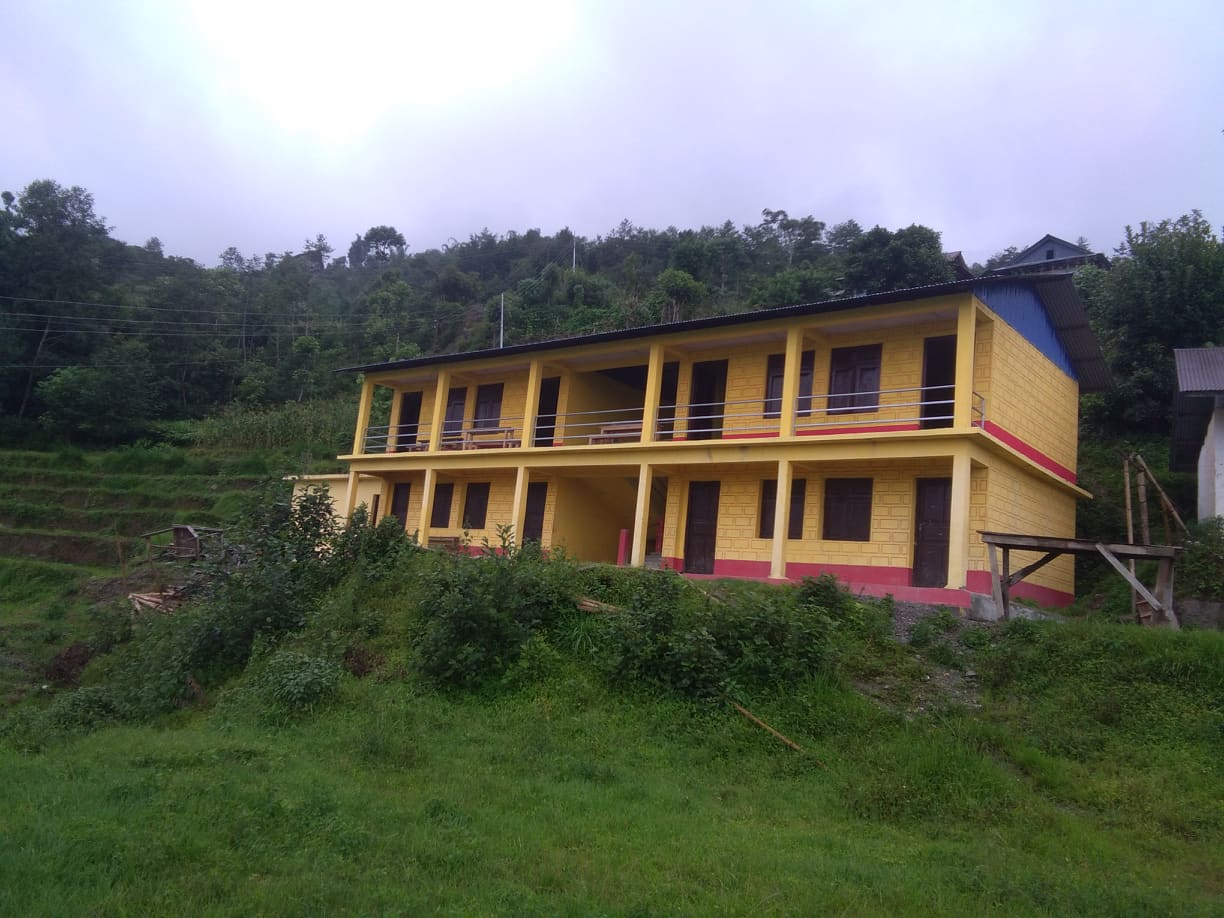
Yangwarak 5, a village in the remote Panchthar District of Eastern Nepal, had yet to see its first secondary school. Pupils completing Year 7 at Sirise School—established in 1975—either had to travel up to an hour and a half to find a secondary school or give up their dreams of pursuing further education. Sadly, this often resulted in children marrying at an early age or resorting to foreign employment before reaching adulthood.
Although the government of Nepal had implemented a policy to establish at least one secondary school in each village municipal ward, Yangwarak village was not prioritised due to limited government budgets and resources.
Sirise School, established as a Primary School 45 years ago, was only a Lower Secondary school in the area. The school would have had sufficient infrastructure to become a secondary school had the devastating earthquakes of 2015 not destroyed one of its three buildings. In 2016, the Dilmaya Memorial Foundation (DMF), in collaboration with the Non-Resident Nepali Association UK (NRNA UK)—one of the 80 chapters of the global organisation of Nepalese living abroad—took the initiative to rebuild the school with an estimated cost of Rs 35 lakhs (£25K). Through various sources, including two charity fundraising dinners and sponsors like the Pahakholse Family and Dilmaya Foundation, NRNA UK successfully completed Phase 1 of the rebuilding project with a total of Rs 21 lakhs.
The new building, named Dilmaya Bhawan, is a two-storey, six-room structure that was completed in 2021. This development played a pivotal role in allowing Sirise School to upgrade to a High School, enabling local students to access high school education in their village for the first time in history.
